October 09, 2026


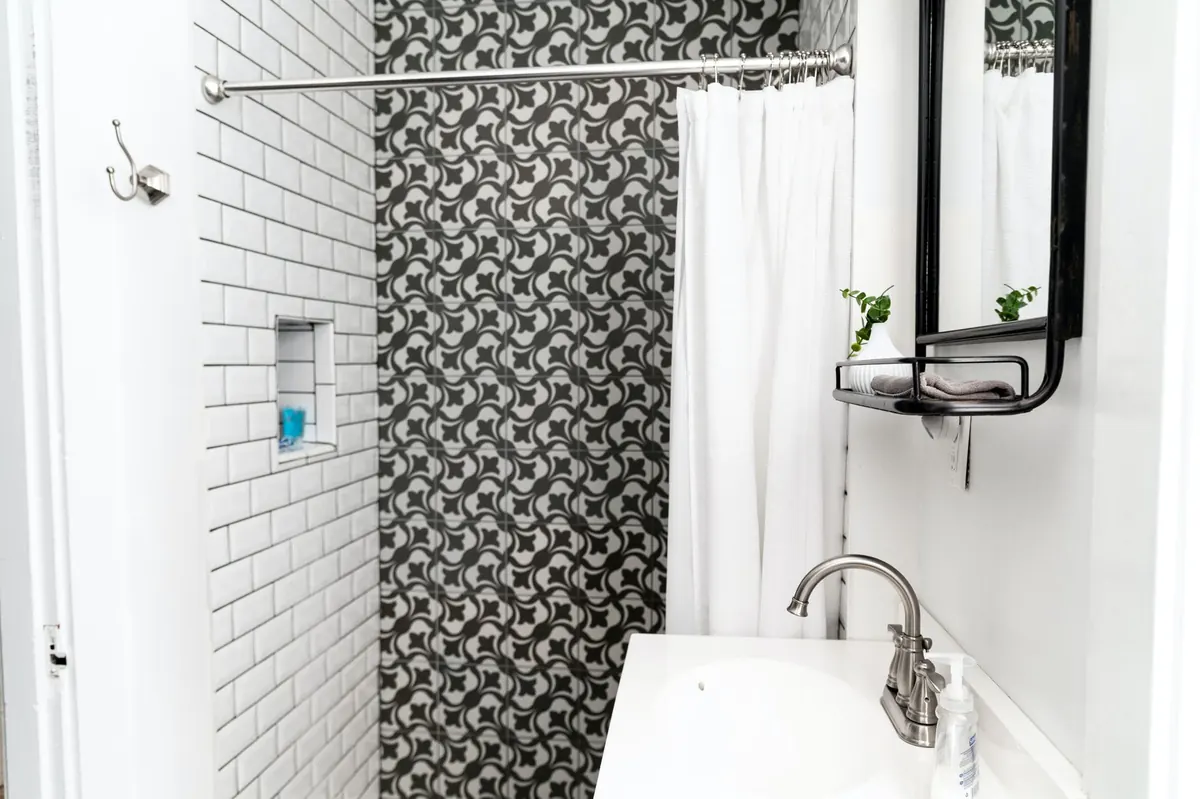
A rental bathroom is a strange design brief. You want it to feel like yours, you can't change the tiles, and the room is damp for a good part of every day. Most damage renters cause in bathrooms isn't dramatic. It's a lifted patch of paint behind a hook, a rust ring under a bottle, a speck of mould in the corner of a shelf that never quite dried out. Almost all of it is avoidable, and none of it requires a landlord's permission to prevent.
Adhesive strips earn their reputation on smooth, sealed surfaces and lose it everywhere else. On emulsion paint — especially cheaper matt paint — the bond can be stronger than the paint's grip on the plaster, so removal takes a coin-sized patch with it. Across grout lines and textured tiles, hooks rarely sit flush anyway, so they drop off mid-use and take a bottle of shampoo with them.
If you're set on adhesive, do three things. Clean the surface with warm soapy water and let it dry fully, because soap residue sabotages the bond. Press the strip on for the full recommended time before hanging anything, and keep the load light. Then test one hook in a hidden spot — behind the door, under the sink — and leave it a few days before committing to a row.
To remove them, warm the adhesive with a hairdryer on a low setting and pull the tab slowly, parallel to the wall rather than outwards. Residue usually shifts with warm soapy water and a soft cloth. Never scrape at it with a blade.
Treat your bathroom like a coastal climate, because in practice it is one. Anything porous, untreated or water-absorbent will fail faster here than anywhere else in the flat.
Decorating often makes a damp room worse by accident. A shelf of trailing plants over the radiator, a basket stack in front of the extractor grille, a heavy blind kept closed all day — each traps moisture with nowhere to go.
Keep the extractor clear and let it run well past the end of your shower instead of flicking it off as you leave. Open the window while the room is steamy, then leave the door ajar afterwards so it can dry. Wiping the walls down after a long shower takes thirty seconds and saves a lot of scrubbing later.
If mould keeps returning to the same patch of ceiling or grout, that's usually a ventilation, insulation or plumbing issue rather than something a nicer shelf will fix. Put it in writing to your landlord or letting agent and keep a copy. For anything structural, damp-related or covered by your agreement, check your tenancy and take advice from a housing adviser if it isn't resolved.
Landlords choose beige tiles for a reason. You don't have to like them, but a scheme built around them will always look calmer than one arguing with them. Pull your palette from the grout, the tile or the floor, then add warmth with towels, a bath mat and a plant or two.
The temptation is to cover the lot: peel-and-stick tiles over the existing ones, a painted wall, a swapped shower head. Two of those three sit somewhere between risky and a breach of your tenancy. Peel-and-stick over tiles only works if the originals are glossy, spotless and bone dry; on matte finishes and grout lines it lifts at the corners within weeks. Painting normally needs written permission, and even bathroom-specific paint fails on a badly prepared wall — plus you'll need the original colour for touch-ups when you leave.
Swapping a shower head or light fitting looks harmless, but changing plumbing and electrics can affect your landlord's insurance and your deposit. Ask first, in writing, and keep the old parts.
Renter-friendly storage is a small engineering project. Over-toilet racks look weightless and hold far more than a cistern lid was designed for. A tension-pole caddy will slip at three in the morning if the ceiling is textured or the room has any slope. Unlidded baskets under a basin catch splashes and become the dampest corner in the room.
Lighter is safer:
If something genuinely has to be drilled — a cabinet, a mirror, a towel rail — get permission first and keep the fixings so you can leave the wall tidy.
Every renter-safe update has a reverse gear, and it's worth knowing what it is before you buy. Keep spare adhesive strips and the original packaging flat under the bed. Photograph the bathroom the day you move in, with the date visible, and again before you hand back the keys.
Then walk round as if you were the landlord doing the checkout: residue on the tiles, a dried water ring on the shelf, a wobbly hook. Anything you can fix in ten minutes is cheaper than a deposit deduction.
If the answer to the last one is "just itself", you've found a safe buy. Decorate the bathroom you actually have — warm, damp and not quite yours — and it will hold together nicely until moving day.
Photo: Andrea Davis / Pexels
Small ideas for cozy corners and compact homes.
Copyright © 2026 Nook Bit. All rights reserved. Nook Bit.