October 09, 2026


Most small living rooms are already doing three jobs at once: somewhere to watch television, somewhere to eat, somewhere to dump the post. Adding a reading corner to that list sounds unrealistic until you stop thinking of it as a room within a room. It is not. It is one chair, one pool of warm light and one flat surface for a mug. Get those three things right and the corner will feel deliberate rather than squeezed in.
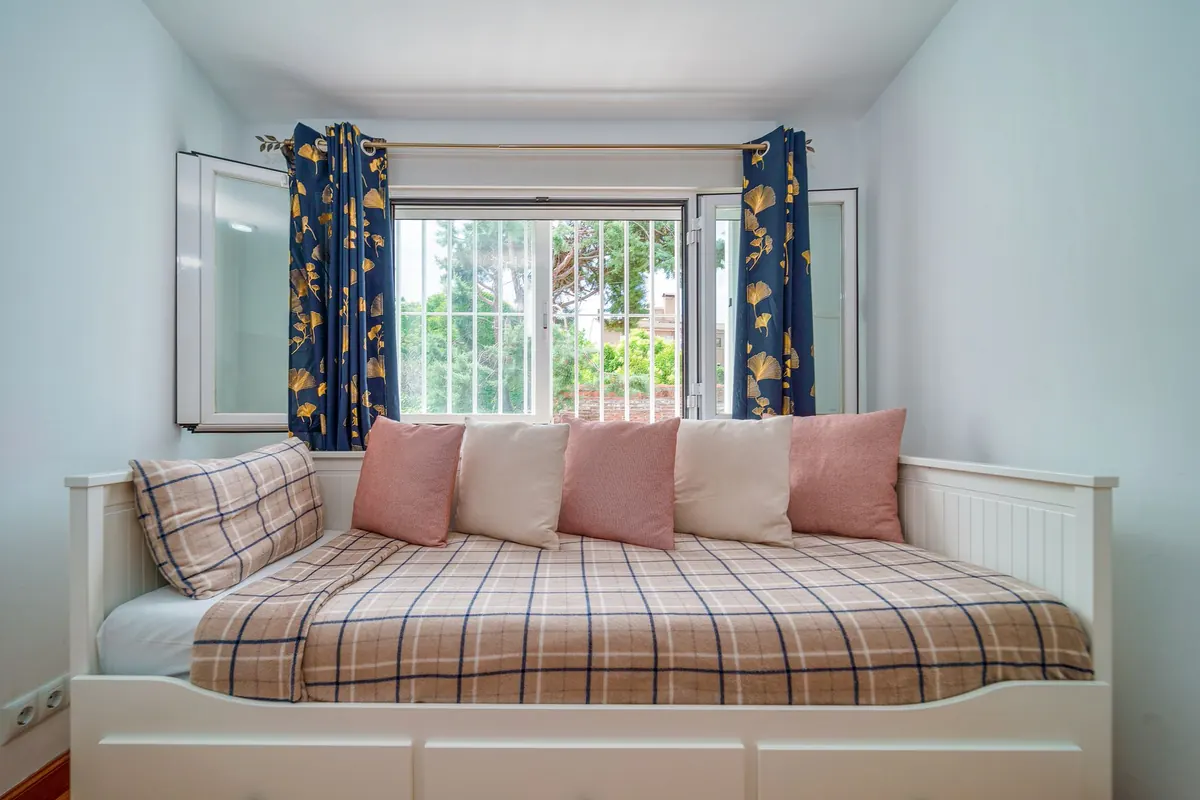
Before you buy anything, walk around the room and look for the spot you instinctively avoid. Corners between a chimney breast and an external wall, the end of a sofa that nobody sits on, the alcove beside a window, the space behind a door that opens the other way. These are the places where a chair can sit without blocking a route from the doorway to the sofa or the kitchen.
Two things to rule out straight away: directly in front of a radiator, which will make you too warm and dry your eyes, and any position where a lamp will sit between you and the television. Measure the footprint you have in mind, then add roughly a stride in front of the chair for standing up and stepping away. Mark it out with masking tape or a folded throw and live with it for a day. If you keep stepping over the tape, that corner is a walkway, not a nook.
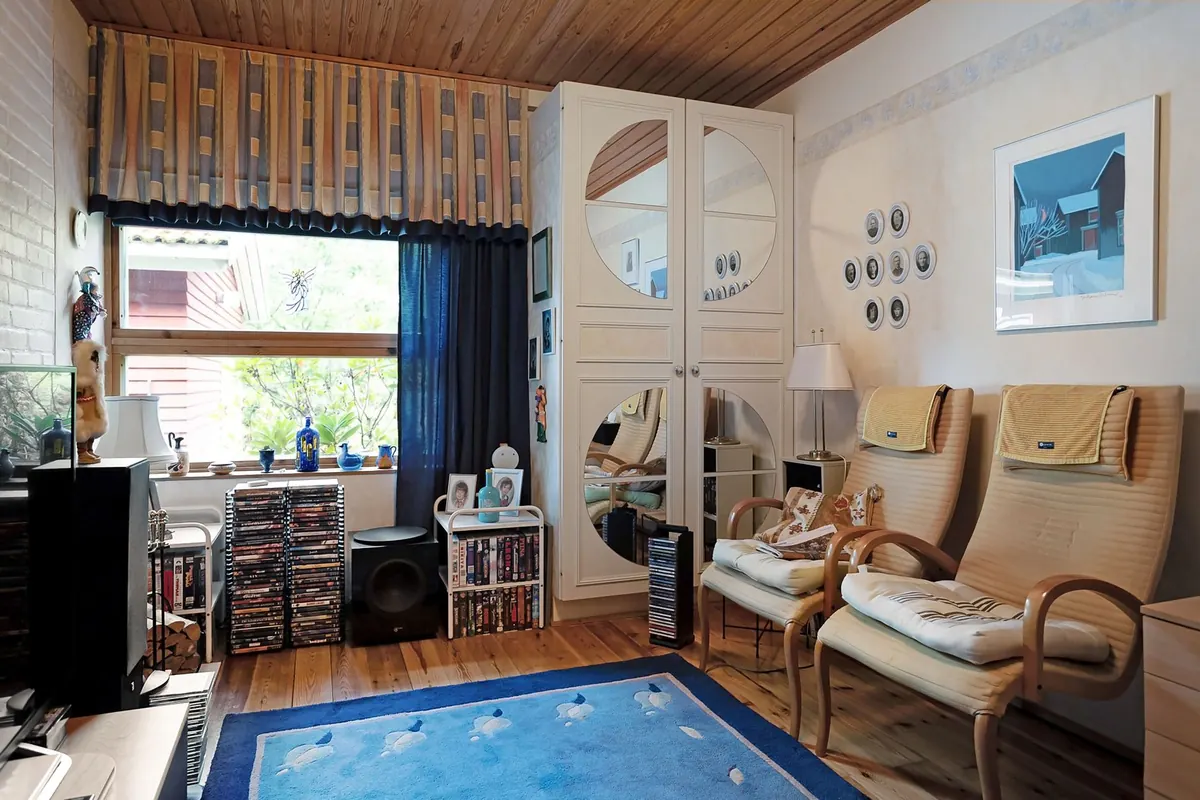
An armchair in a small room has to be comfortable enough to actually use and neat enough not to swallow the floor. High backs and wings feel enclosing, which suits a corner, but they can also look heavy against a low ceiling. A tub chair or a small accent chair takes up less visual room because light passes underneath it.
Fabric matters more than colour in a room this size. Wool blends, weaves and textured cottons hide the marks that come with everyday use; anything very pale and very smooth will show every crumb. If you are buying secondhand, sit in the chair for a full chapter before handing over any money, and check the frame for wobble rather than just the upholstery.
Nothing kills a reading corner faster than a single ceiling light. Switch it off and light the corner instead, in two or three small pieces.
Choose warm white bulbs, in the region of 2700K, and keep them on a dimmer so the corner can be bright for reading and low for everything else. If you cannot change the wiring, a plug-in dimmer switch for the lamp costs very little. Check the bulb is dimmable, otherwise it will hum or flicker.
Light the page, not the room. If you can see the bulb from where you sit, the shade is in the wrong place.
Clutter is what makes a small reading corner look like a pile of belongings rather than a place to sit. Every piece you bring in should hold something as well as look calm.
A side table with a lower shelf is the obvious choice: mug and book on top, current magazines underneath. Nesting tables give you a surface for a laptop on the days you are not reading. A slim console tucked behind the chair handles lamps, a plant and a drawer of cables. A lidded footstool doubles as seating and hides a throw. If you are short of floor, go upwards: a single shelf or two fixed above the chair at a height you will not catch your head on, using fixings suited to your wall type.
Keep only a handful of books in the corner itself and rotate them from elsewhere in the house every month or so. A small tray for your phone, glasses and a charging cable stops the tabletop turning into a nest of wires.
Hard corners feel cold. A small round rug or a short runner under the chair anchors the nook and separates it from the rest of the room without a wall. Add a cushion for your lower back and one to hold, plus a throw in a basket within reach for cooler evenings.
Paint is the cheapest way to make the corner feel like its own place. A deeper shade of the room's main colour on the wall behind the chair draws it in and makes the space feel intentional rather than accidental. Keep the pattern count low: one patterned textile, everything else plain, is usually plenty.
A tray to carry a mug safely across the carpet, a coaster, a bookmark in reach, headphones on a hook, and one plant that tolerates low light such as a snake plant or a small pothos. Leave the surface mostly empty. One lamp, one object, one plant is a rule that holds up in almost any small corner.
A reading nook only works if it stays clear. Once a week, take the mug and the post away, shake the cushion, and put any book you have finished back on the main shelves. Once a month, check the lamp is still angled where you actually read and that nothing has crept onto the footstool. If you find yourself avoiding the chair, the problem is usually the light, so try moving the lamp before you move the furniture.
Start with the chair and one warm lamp. Add the rest when you notice you need it. A corner that grows out of how you actually sit will always beat one assembled in a single afternoon.
Photo: Alex Tyson / Pexels
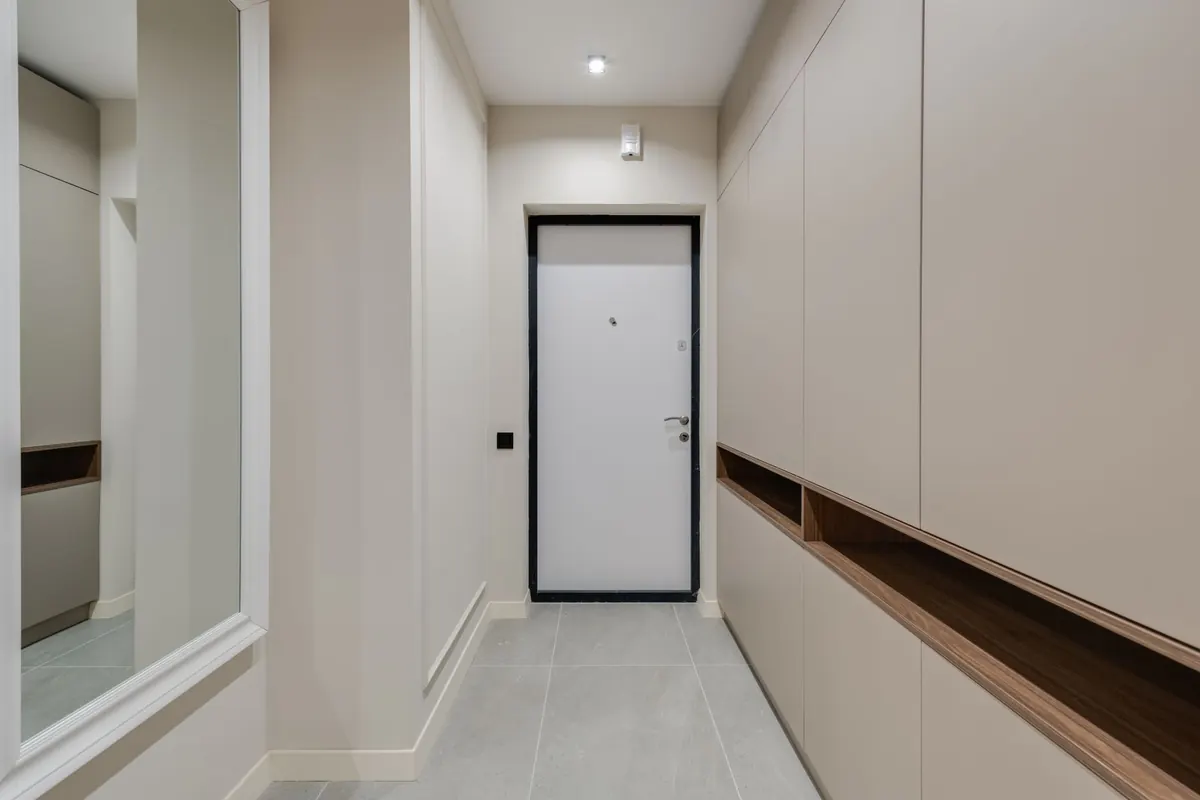
Small ideas for cozy corners and compact homes.
Copyright © 2026 Nook Bit. All rights reserved. Nook Bit.